Don’t Ignore These 5 Signs Your Brakes Need Attention
May 4, 2026
Squealing, grinding, or a spongy pedal — learn the warning signs that could save your life and your wallet.
Your vehicle’s braking system is arguably its most critical safety feature. Every time you press that pedal, you trust that heavy machinery will come to a safe, controlled stop. However, brakes naturally wear down over time due to friction, heat, and everyday driving conditions. Ignoring the early indicators of wear can compromise your safety and lead to far more expensive repairs down the line.
Many drivers wait until their vehicle completely fails to stop properly before visiting a mechanic. This approach puts you, your passengers, and other drivers at serious risk. Paying attention to how your car sounds and feels while driving is the best way to catch minor issues before they escalate into major mechanical failures.
Understanding the symptoms of failing brakes does not require a degree in automotive engineering. You simply need to know what to look, listen, and feel for during your daily commute. Here are five unmistakable signs that your brakes require immediate professional attention.
Sign 1: Squealing or Squeaking Noises
One of the most common and earliest indicators of brake trouble is a high-pitched squealing or squeaking sound when you apply the pedal. Automotive manufacturers actually design brake pads with a built-in early warning system called a wear indicator. This small metal shim sits just above the base of the brake pad.
When the friction material on the pad wears down to a specific level, this metal shim becomes exposed. It then rubs against the metal brake rotor, producing that unmistakable high-pitched noise. If you hear this sound regularly while braking, it means your pads are nearing the end of their lifespan.
Replacing your brake pads at this stage is a standard, relatively inexpensive maintenance task. Ignoring the squeak means the pads will continue to deteriorate until there is no friction material left, which leads to a much more severe problem.
Sign 2: Grinding Sounds When Braking
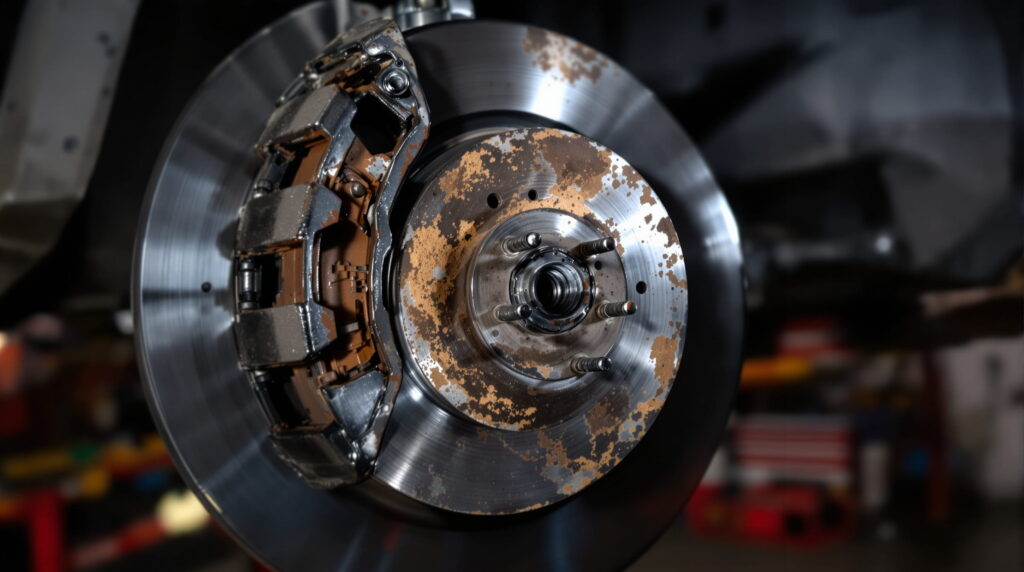
If that high-pitched squeal eventually turns into a harsh, deep grinding noise, you have a serious problem on your hands. A grinding sound means the friction material on your brake pads has completely worn away. The metal backing plate of the brake pad is now clamping directly onto the metal brake rotor.
This metal-on-metal contact is highly destructive. It aggressively gouges and scratches the smooth surface of the rotor, generating immense heat and drastically reducing your vehicle’s stopping power.
Driving with grinding brakes is incredibly dangerous. Every time you stop, you are causing permanent damage to the rotors. If you hear this noise, stop driving the vehicle immediately and have it towed to a trusted mechanic. You will likely need to replace both the brake pads and the rotors, which significantly increases the repair bill.
Sign 3: Spongy or Soft Brake Pedal
Your brake pedal should feel firm and offer a consistent amount of resistance when pressed. If the pedal suddenly feels soft, spongy, or sinks all the way to the floorboard with minimal effort, your vehicle requires urgent attention.
A spongy pedal almost always points to an issue within the hydraulic system that powers your brakes. When you press the pedal, brake fluid travels through hoses to apply pressure to the brake calipers. If there is a leak in those hoses, you will lose brake fluid, resulting in a loss of hydraulic pressure.
Another frequent culprit is air trapped inside the brake lines. Air compresses much more easily than liquid brake fluid, which creates that soft, mushy feeling under your foot. A failing master cylinder can also cause this symptom. Because a spongy pedal directly impairs your ability to stop the vehicle quickly, you should never attempt to drive until the hydraulic system is inspected and repaired.
Sign 4: Car Pulling to One Side
When you apply the brakes, your vehicle should stop in a straight, predictable line. If you notice the steering wheel jerking or the car aggressively pulling to the left or right during a stop, your braking system is operating unevenly.
This pulling sensation usually happens when one brake caliper is applying more pressure than the other. A stuck caliper is a frequent cause; the piston inside the caliper seizes up, either failing to clamp down on the rotor or failing to release it.
Alternatively, a collapsed brake hose can restrict the flow of brake fluid to one specific wheel. Uneven brake pad wear can also contribute to this pulling effect. Regardless of the exact mechanical failure, a car that pulls to one side is difficult to control in an emergency stopping situation. A mechanic will need to inspect the calipers, hoses, and pads to restore balanced braking power.
Sign 5: Vibrations or Shaking When Braking
Experiencing a pulsating brake pedal or a shaking steering wheel when you try to slow down is a clear indicator of rotor trouble. Brake rotors are large metal discs that the brake pads clamp against to stop the wheels from turning. For the system to work smoothly, the surface of these rotors must be perfectly flat and even.
Over time, the intense heat generated by heavy braking can cause the metal rotors to warp. When a rotor loses its perfectly flat shape, the brake pads skip and bounce over the uneven surface as they try to grip it. This rapid bouncing translates into a noticeable vibration that travels through the brake pedal and into the steering column.
Warped rotors increase your stopping distance and make the vehicle uncomfortable to drive. Depending on the thickness of the rotor, a mechanic might be able to machine the surface back to a smooth finish. If the rotor is too thin or severely warped, it will require a full replacement.
Keep Your Vehicle Safe for the Road
Your brakes are the ultimate safety net for you and your passengers. Catching issues early keeps you in control behind the wheel and helps you avoid massive mechanic bills caused by collateral damage to your rotors and calipers.
Pay close attention to how your car behaves on your daily drive. If you notice any unusual noises, vibrations, or a change in pedal resistance, do not delay. Schedule an inspection with a certified technician to ensure your braking system remains in peak condition.