

Brake Fluid: Why It Matters and When to Flush It
February 18, 2026
Moisture in brake fluid is invisible but dangerous. Learn how often to flush it and why this cheap service prevents costly repairs.
When you press down on the brake pedal, you expect your vehicle to come to an immediate, controlled stop. We rarely think about the complex mechanical processes happening behind the scenes to make that stop possible. You might check your engine oil regularly or keep an eye on your tire tread, but the hydraulic fluid powering your brakes often goes entirely unnoticed.
Ignoring this vital component can lead to serious safety risks on the road. Brake fluid degrades silently over time, losing its effectiveness long before you notice any symptoms behind the wheel. By understanding how this fluid works, you can take proactive steps to maintain your vehicle. This guide covers exactly why brake fluid is essential, how it breaks down, and the exact intervals you should follow to keep your braking system in peak condition.
Why brake fluid matters for safety
Your vehicle’s braking system relies heavily on hydraulic pressure. When you apply pressure to the brake pedal, the master cylinder pushes brake fluid through narrow hoses and pipes down to the wheels. This fluid transfers the mechanical force of your foot into the immense pressure needed to squeeze the brake pads against the rotors, slowing the heavy vehicle down.
Because liquids cannot be compressed, brake fluid is the perfect medium for transferring this force instantly. If the fluid is clean and in good condition, the transfer of power is direct and efficient. A firm, responsive brake pedal gives you the control you need to navigate sudden stops, steep hills, and unexpected hazards.
Without high-quality brake fluid, the entire system falls apart. If the hydraulic pressure drops due to degraded fluid, your vehicle will take much longer to stop. In extreme cases, the system can fail entirely, leaving you without any way to halt the car.
How moisture enters the system and its effects
Most standard brake fluids are hygroscopic. This means they naturally attract and absorb moisture from their surrounding environment. You might assume your braking system is entirely sealed, but microscopic amounts of water can still find their way inside. Moisture penetrates through tiny pores in the rubber brake hoses, seeps past aging seals, and enters the reservoir when the cap is opened for an inspection.
Over a few years, this absorbed water completely changes the chemical makeup of the fluid. The most immediate and dangerous effect is a significant drop in the fluid’s boiling point.
The friction generated by your brake pads clamping down on the rotors creates an enormous amount of heat. Under heavy braking, this heat transfers directly into the brake fluid. Fresh fluid has a very high boiling point and can withstand these extreme temperatures easily. However, when water mixes into the fluid, the overall boiling point plummets.
If the compromised fluid gets hot enough, the trapped moisture will actually boil and turn into steam. Unlike liquid, steam is a gas, and gas can be compressed. When you step on the pedal, the force compresses the gas bubbles instead of moving the brake pads. This causes a terrifying condition known as “brake fade,” where the pedal feels spongy and goes straight to the floor without stopping the car.
Furthermore, water inside a metal system leads to internal corrosion. Moisture causes the steel brake lines, the master cylinder, and the delicate valves inside the anti-lock braking system (ABS) to rust from the inside out.
When to flush your brake fluid: Recommended intervals
Maintaining your braking system requires removing the old, moisture-heavy fluid and replacing it with a fresh batch. Determining exactly when to do this depends on a few different factors, but industry standards offer clear guidance.
Most automotive manufacturers recommend a complete brake fluid flush every two years or every 30,000 miles, whichever comes first. You should always consult your specific vehicle’s owner’s manual, as some modern cars use advanced fluids that can stretch this interval to three years.
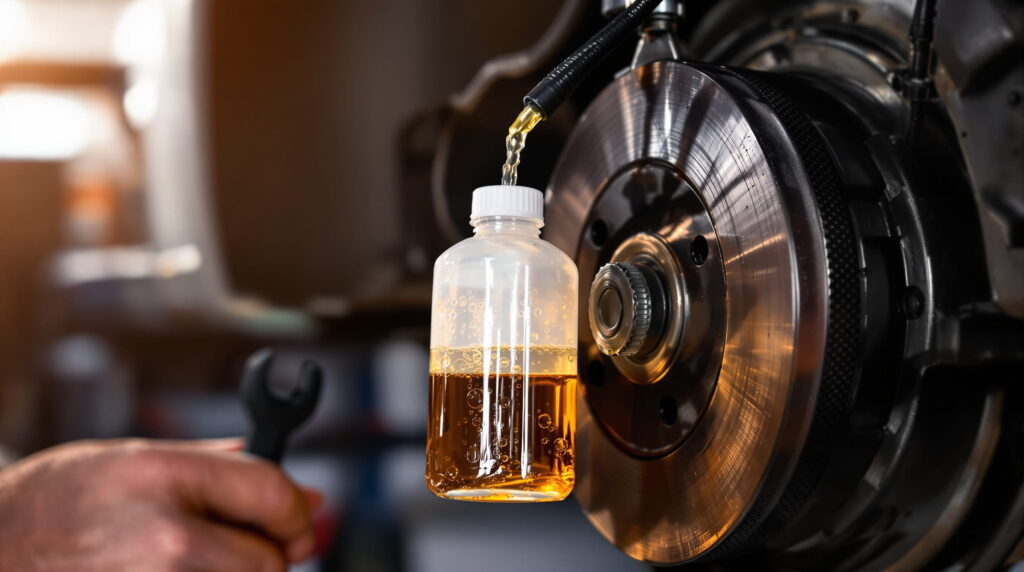
You can also keep an eye on the fluid’s condition yourself. Pop the hood and locate the brake fluid reservoir. Fresh brake fluid is almost clear, with a slight yellow tint. As it ages, absorbs water, and picks up internal rust or debris, it turns dark brown or even black. If your fluid looks like dark syrup, a flush is absolutely necessary.
Mechanics also have specialized tools to test the fluid’s exact health. A simple electronic moisture meter can calculate the water content percentage in seconds. Alternatively, chemical test strips can reveal the level of copper in the fluid, which is an early indicator of internal corrosion. If a test shows a moisture content above three percent, the fluid must be changed.
How a cheap flush prevents costly repairs
Many drivers skip fluid flushes because their brakes currently feel fine. Skipping this maintenance is a gamble that usually results in massive repair bills down the road.
A professional brake fluid flush typically costs between $100 and $150. During this service, a technician bleeds the old fluid out of the lines, removes trapped air bubbles, and fills the reservoir with a fresh, high-boiling-point formula.
Compare that small maintenance fee to the cost of repairing the damage caused by neglected fluid. If moisture is allowed to sit inside the lines, it will rot the metal. Replacing rusted brake lines is a highly labor-intensive job that can easily cost hundreds of dollars. If the internal seals of the master cylinder fail due to contaminated fluid, a replacement will cost anywhere from $300 to $600.
The most expensive casualty of bad brake fluid is the ABS module. This computerized pump relies on microscopic valves to pulse the brakes during an emergency stop. Internal rust can clog these delicate valves, ruining the entire unit. A new ABS module often carries a price tag ranging from $1,000 to well over $2,000.
Paying a small amount for preventative maintenance completely protects these expensive components from premature failure.
Protect your brakes and your wallet
Taking care of your braking system requires a little proactive attention, but the payoff is immense. You ensure your vehicle can stop reliably in any weather condition, keeping you and your passengers safe. You also protect the intricate, expensive components of your hydraulic system from internal decay.
Check your vehicle’s service records today to see when the brake fluid was last replaced. If it has been more than two years, or if the fluid in the reservoir looks dark and murky, it is time to take action. Schedule a flush with a trusted mechanic and secure your peace of mind on the road.